 US
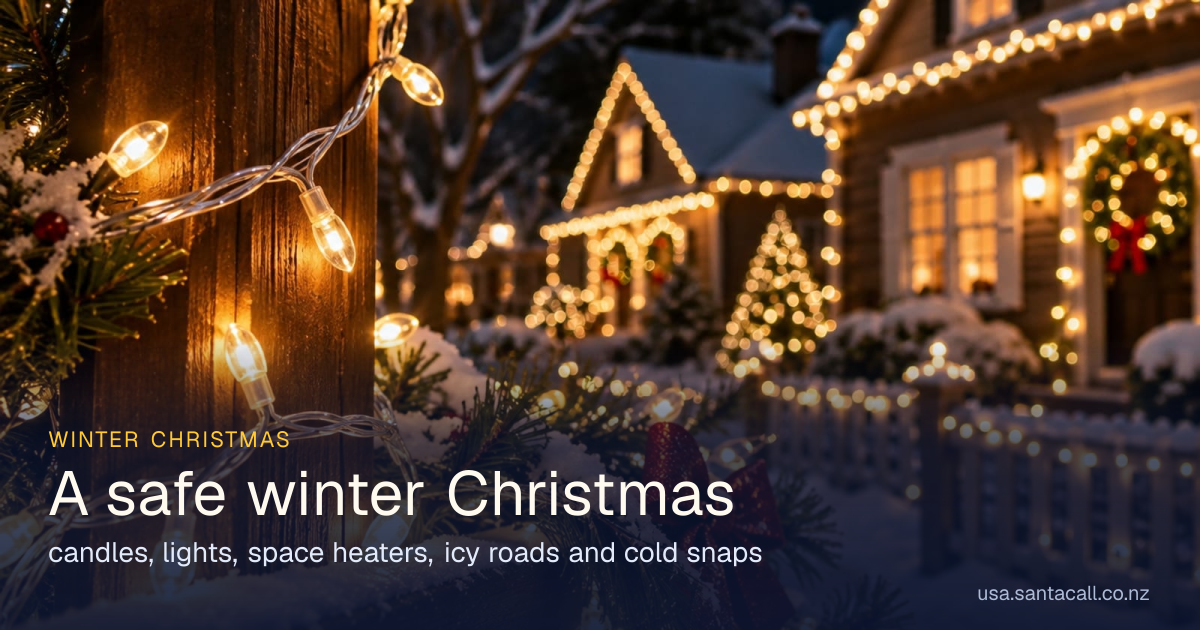
Christmas in most of America is cold, dark early and full of things that glow. That is part of the magic. It also means a few extra risks in December. None of this is complicated, and most of it takes five minutes to sort out.
Candles
The Massachusetts Department of Fire Services points out that more candle fires happen in December than in any other month. Keep candles at least a foot from anything that can burn, including the tree, curtains, paper decorations and greenery. Put them on a steady surface where kids and pets cannot knock them. Blow them out when you leave the room or go to bed. Battery candles look almost as good and are the easy choice for windows and kids' rooms.
Holiday lights
- Use indoor lights inside and outdoor-rated lights outside.
- Check every string for cracked sockets, broken bulbs and worn wires before you hang it.
- Do not plug one extension cord into another.
- Turn the lights off at bedtime, or use a timer.
If you have a real tree, keep it watered. Our guide to real trees covers the rest.
Space heaters
The Consumer Product Safety Commission advises keeping space heaters at least three feet from beds, curtains, sofas, clothes and anything else that can burn. Plug them straight into a wall outlet, not a power strip, and do not run the cord under a rug. Set them on a flat surface where they cannot tip over, and do not leave one running in a closed room while nobody is watching.
Carbon monoxide
Winter is when carbon monoxide becomes a real danger, from furnaces, fireplaces, generators and cars. Put carbon monoxide alarms on every level of the home and outside the bedrooms, and test them monthly. If one sounds, get everyone outside and call 911.
If the power goes out, never run a generator, grill or camp stove indoors, in the garage or on the porch. The CDC says to keep generators outside and at least 20 feet from doors, windows and vents. Do not use a gas oven to heat the house.
Icy roads
Holiday travel often means long drives in bad weather. Before you go:
- Check the forecast and road conditions. Many states run a 511 phone line or website with live road reports.
- Keep a winter kit in the car: blankets, a flashlight, an ice scraper, a phone charger, water, snacks and a small shovel.
- Fill up the tank before a long drive, and keep it at least half full.
- Slow down, leave more space, and remember that bridges freeze first.
- Make sure car seats are buckled snugly. Bulky winter coats can stop a harness from fitting properly, so put a blanket over the straps instead.
Cold snaps
When it gets very cold, dress kids in thin layers, with a hat, mittens and warm boots. The American Academy of Pediatrics suggests avoiding outdoor play when the temperature or wind chill drops below -15°F. Bring them in for regular warm-up breaks, and change wet clothes right away.
Check on older neighbors, especially if the power is out. Let a faucet drip on the coldest nights if your pipes are prone to freezing.
A calm December
With the safety jobs done, you can get on with the fun part. If the weather keeps you home, a Santa message or a call from Santa brings a bit of the North Pole indoors, no driving required.
Common questions
How far should a space heater be from other things?
The Consumer Product Safety Commission advises at least three feet from beds, curtains, furniture and anything else that can burn.
How far from the house should a generator be?
The CDC says to run generators outside only, at least 20 feet from doors, windows and vents, and never in a garage or on a porch.
What should be in a winter car kit?
Blankets, a flashlight, an ice scraper, a phone charger, water, snacks and a small shovel are a good start.
When is it too cold for kids to play outside?
The American Academy of Pediatrics suggests avoiding outdoor play when the temperature or wind chill is below -15°F.